


The Do's and Don'ts of Setting Boundaries in a Relationship


In my first blog post on my series regarding boundaries, Take Charge of Your Mental Health: A Therapist’s Guide to Setting Boundaries, I discussed different ways one can begin to implement boundaries in one’s life. In this second blog post in this boundaries series, I will be discussing the Do’s and Don'ts of boundary setting.

Setting boundaries is an essential aspect of maintaining healthy relationships. However, like any skill, there are both do's and don'ts to keep in mind when first establishing boundaries. Whether you're navigating your marriage, personal relationships, professional dynamics, or even your relationship with yourself, here are some guidelines from a therapist's perspective on the do's and don'ts of setting healthy boundaries in a relationship:

Boundary-setting Do’s & Don’ts

1. Focus on Yourself

  • Do: Clearly express your needs, feelings, and limits based on your own experiences and emotions.

  • Don’t: Avoid trying to dictate or manipulate the other person's actions. Your boundaries should be about your own well-being, not an attempt to try and control another person’s behavior.

2. Use "I" Statements

  • Do: Frame your boundaries using "I" statements to express your feelings and needs — for example, "I feel uncomfortable when..."

  • Don’t: Avoid using "you" statements that might blame or accuse the other person, as this can be perceived as an attempt to control and potentially can take away from your feelings regarding the situation.

3. Be Consistent

  • Do: Consistency is crucial when it comes to maintaining boundaries. Once you've set a boundary, stick to it. Consistent reinforcement reinforces the message that your boundaries are non-negotiable.

  • Don’t: Try to change your boundaries to influence or to try to control the other person's behavior — consistency with boundaries can help build trust.

4. Respect Others’ Boundaries

  • Do: Recognize and respect the other person's boundaries as well — it's a two-way street.

  • Don’t: Avoid expecting another person to adhere strictly to your boundaries while disregarding theirs — mutual respect is crucial for a healthy relationship.

5. Seek Communication & Understanding

  • Do: Encourage open communication to understand each other's needs and feelings.

  • Don’t: Avoid shutting down communication or forcing compliance — understanding each other's perspectives is key to building a healthy relationship.

When first learning to establish boundaries, one may feel scared, overwhelmed, or uncomfortable. However, my hope is that by following these do's and don'ts and using them as a guideline for how to set boundaries, one can begin to feel more confident and at ease with establishing boundaries and feel like they are one step closer to living a more fulfilling life — a life that consists of cultivating healthy relationships, increased self-esteem, and a lifestyle that aligns with your values and priorities. Remember that boundaries are about taking care of yourself, expressing your needs, and fostering mutual respect.


Take Charge of Your Mental Health: A Therapist's Guide to Setting Boundaries


Boundaries are the invisible lines we draw around ourselves to define our limits, protect our mental health and our emotional and physical well-being, and maintain a sense of autonomy. Establishing boundaries is an act of self-respect, asserting your needs and values in relationships and situations. Maintaining a sense of balance can be challenging, especially when it comes to establishing and maintaining boundaries. As a therapist, I understand the crucial role that boundaries play in our mental health and emotional well-being. In this first blog post in my boundary blog series, we'll explore how you can implement boundaries in your own life. 

7 Tips for Implementing Boundaries from a Mental Health Therapist

1. Self reflect

One of the first steps when thinking about implementing boundaries is to begin by reflecting on your values, needs, and personal boundaries. What behaviors or situations leave you feeling drained or uncomfortable? Identify areas in your life where boundaries are needed.

2. Clarify your limits

Define your boundaries clearly and specifically. Be honest with yourself about what you're comfortable with and what crosses the line, whether it's time, energy, physical space, or emotional intimacy.

3. Communicate assertively

Practice assertive communication when expressing your boundaries to others. Use "I" statements to assert your needs without blaming or accusing. Be direct yet respectful in your interactions when setting boundaries.

4. Set realistic expectations

Be realistic about what you can and cannot control. Understand that not everyone will respect your boundaries, and that's okay. Focus on asserting your limits and prioritizing your well-being, regardless of others' reactions.

5. Learn to say “no” 

Saying no is a powerful act of self-care and boundary-setting. Practice saying no to requests or obligations that conflict with your boundaries. This might feel a bit uncomfortable at first. However, it is essential when working towards maintaining boundaries and prioritizing your well-being.

6. Seek support 

Surround yourself with supportive individuals who respect and encourage your boundaries. Seek guidance from friends, family, or a therapist who can offer validation, insight, and encouragement as you navigate the boundary-setting process.

7. Practice self-compassion

Be gentle and kind with yourself as you begin to establish and enforce boundaries. It's normal to feel anxious or guilty when you are beginning to set boundaries. However, remember that prioritizing your well-being is not selfish — it's essential for your overall health and happiness.

By recognizing and respecting our own boundaries, we honor ourselves and create space for growth, authenticity, and fulfillment in our lives. Understanding boundaries and how to implement them is the first step towards cultivating healthier, more balanced relationships with ourselves and others. So, take a moment to reflect on your own boundaries, and remember, it's okay to set limits that prioritize your mental health and well-being.

Starting therapy is a great way to prioritize your well-being. If you’d like some help working through and implementing your own boundaries, reach out for a free phone consultation to see if we’re a good fit for working together!


Meet The Counselors | Austin Relational Wellness


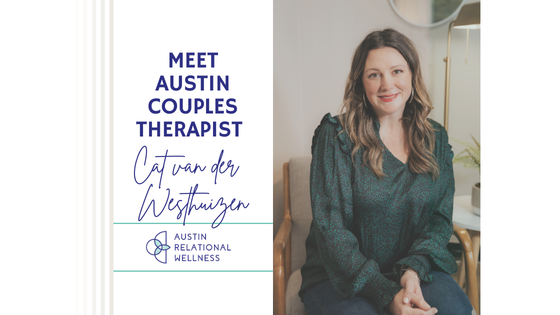
Meet Cat van der Westhuizen: Austin EFT Couples Therapist

Cat is a Licensed Professional Counselor (LPC) and Licensed Marriage and Family Therapist (LMFT)—and the Clinical Director and co-owner of Austin Relational Wellness. She provides couples therapy and individual counseling for adults who are struggling in their relationships and looking to create deeper, more authentic connections.

Cat helps individuals and couples who feel stuck, anxious, or disconnected. Many of her clients come to her worn out from managing others' feelings, struggling to experience their full range of emotions, or caught in painful relationship patterns that feel impossible to break. She supports them in exploring what's really going on beneath the surface so they can understand themselves better and show up more authentically in their lives and relationships.

Cat's Approach to Therapy

Cat’s therapeutic style is shaped by attachment theory, relational psychology, and modern psychoanalytic frameworks. She has advanced training in Emotionally Focused Therapy (EFT) and the Narrative Enneagram, and she continually invests in her own growth through consultation groups focused on couples work, Enneagram, and modern psychoanalysis.

As an Emotionally Focused couples therapist, Cat acts as a process consultant for couples stuck in painful interaction cycles. She helps by slowing down the emotional process, identifying the patterns that keep couples disconnected, and shaping positive experiences that can heal relationships and deepen emotional bonds.

Couples Therapy with Cat

Cat works with couples facing:

  • Communication breakdowns and recurring conflict

  • Disconnection and emotional distance

  • Premarital preparation

  • Life transitions that strain the relationship

  • Rebuilding after trust has been broken

She uses EFT to help couples reconnect, rebuild friendship and intimacy, and develop healthier ways of navigating conflict. Cat believes deeply in the power of a healthy, loving relationship—and she's committed to helping couples create that for themselves.

Community & Professional Involvement

Connection and community are central to who Cat is, both as a therapist and as a person. She recently completed her term as board president for the Austin Association for Marriage and Family Therapy (Austin AMFT), where she served in various roles for over 6 years, and she is an active member of the Austin Community for Emotionally Focused Therapy.

Outside the Therapy Room

When she's not in session, Cat enjoys trying new recipes, camping, and getting out in nature with her husband, daughter, and pit bull.


Looking for a Couples Therapist?

Cat is currently not accepting new clients. But don't worry—our team of experienced couples therapists shares Cat's commitment to evidence-based, relationship-focused care.

If you're ready to start couples therapy or individual counseling, we'd love to match you with one of our other clinicians who can help.


Cat van der Westhuizen, MA, LPC, LMFT, is the Clinical Director and co-owner of Austin Relational Wellness. She has been practicing in Austin since 2017.